CASE STUDY
Georgian townhouse render and sash windows, Newcastle-under-lyme
The short answer
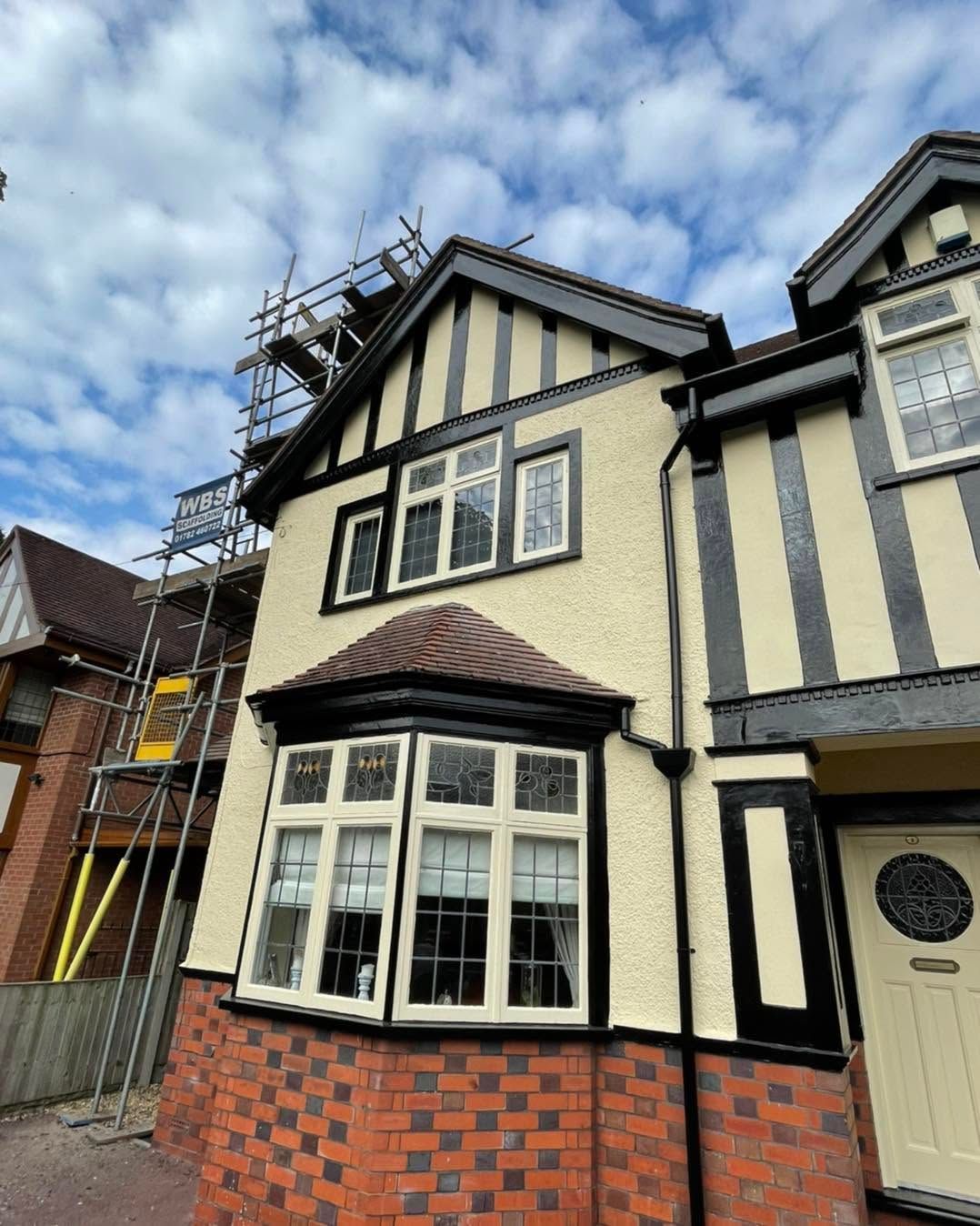
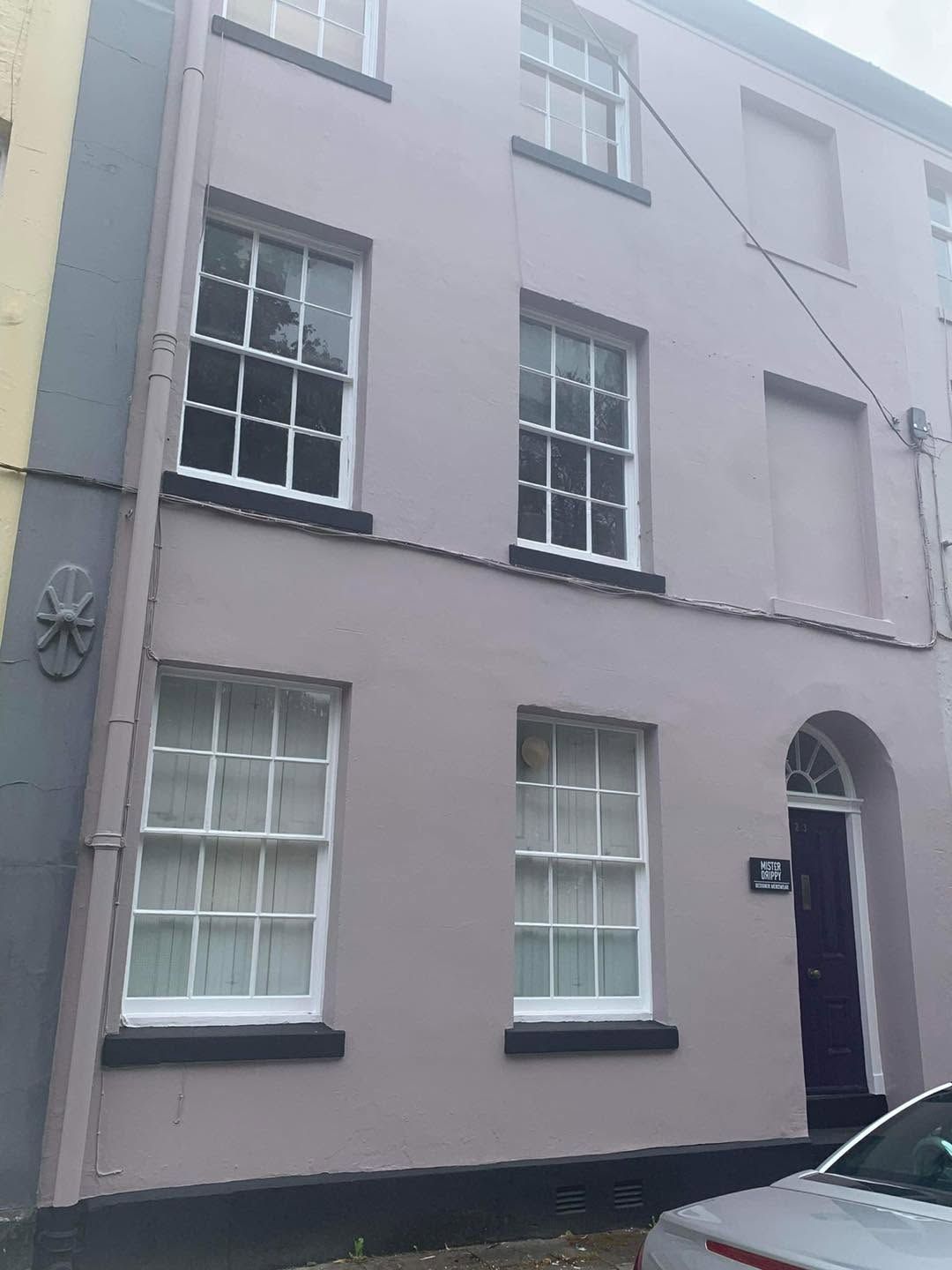
This three-storey Georgian townhouse in Newcastle-under-lyme, with a menswear shop on the ground floor, had a front elevation of cracked, blown render and rotting sash window cills. I scraped every loose area back to a sound edge, sealed it with a stabilising solution, filled and repainted the whole facade, sash windows and front door. The building now has a solid, even finish built to last.
BEFORE
AFTER
- LOCATION
- Newcastle-under-lyme
- Property
- Three-storey Georgian townhouse with a shop below
- Service
- Render repair, sash windows and front door
- Level of work
- Full redecoration
- Duration
- 5 days
- Products
- Stabiliser, filler, masonry paint, white and black exterior paint, aubergine gloss door
What did the customer need?
The customer needed the whole front of the building brought back to a sound, smart finish. It is a three-storey Georgian townhouse with a menswear shop on the ground floor, so the frontage is also the shop's first impression. The painted render had failed in patches across every floor, and the timber sash windows and front door were looking tired. The brief covered the full elevation: render repairs, masonry paint, sash windows, sills, plinth and the panelled front door under the fanlight.
What condition was it in?
The render was in poor condition, with loose, cracked and blown areas on every floor. Blown render has come away from the wall behind it, so it sounds hollow when tapped and eventually falls off. The old paint was chalky and streaked from years of weathering. Several timber sash window cills had wet rot, with soft, blackened wood showing through cracked paint. Down at pavement level, the plinth paint was flaking, with moss growing and older coats showing through.
What preparation was needed?
Preparation was the biggest part of this job, and a lot of hours went into it. This was a Full redecoration because the failing render had to be cut back and repaired before any paint could go on, not just cleaned and recoated.
1
Scraped every loose and blown area of render and paint back to a solid, sound edge.
2
Sealed the scraped areas with a stabilising solution, which soaks in and binds powdery surfaces so filler and paint can grip.
3
Filled the render repairs and let them cure.
4
Repaired the rotten timber in the sash window cills, keeping the original windows.
5
Sanded and prepared the sash windows, plinth and front door, then painted the whole facade from top to bottom.
![Wet rot in a timber sash window cill on a Georgian building in [Town]](https://irp.cdn-website.com/4d8d9257/dms3rep/multi/opt/img08-1920w.jpg?jxl&v=jxl)
![Render scraped back to a sound edge and filled on a Georgian facade in [Town]](https://irp.cdn-website.com/4d8d9257/dms3rep/multi/opt/img15-1920w.jpg?jxl&v=jxl)
![Filled render repairs above a Georgian fanlight door in [Town]](https://irp.cdn-website.com/4d8d9257/dms3rep/multi/opt/img17-1920w.jpg?jxl&v=jxl)
Which paints and materials were used?
I used a breathable masonry paint on the render, in a soft pink-lilac, and exterior paint on the timber. The sash windows and door surround are white, and the stone sills and plinth are black, which frames the windows and hides splashback at street level. The four-panel front door is finished in a deep aubergine high gloss that picks out the mouldings. A stabilising solution and exterior filler went on before any paint, so the finish sits on a sound base.
What was the result?
The facade now has a solid, even finish from the plinth to the top floor, with no sign of the patchwork underneath. The white sash windows stand out cleanly against the pink-lilac walls and black sills, and the glossy aubergine door under the Georgian fanlight gives the shop a proper entrance. Because every repair was taken back to sound material and stabilised first, the new paint is bonded to a surface that will hold, rather than one that will keep shedding.
![Aubergine high-gloss Georgian front door with white surround in [Town]](https://irp.cdn-website.com/4d8d9257/dms3rep/multi/opt/img05-1920w.jpg?jxl&v=jxl)
Questions about this job
How long did the job take?
The job took 5 days. Most of that time went on preparation, scraping back, stabilising and filling the render before any paint went on. On a period facade, the prep is what makes the finish last.
Can you paint over cracked or blown render?
No. Paint over loose render fails as the render keeps coming away. Every loose area needs scraping back to a sound edge, sealing and filling first, and only then is the wall ready for masonry paint.
Can rotten sash window cills be repaired instead of replaced?
Often, yes, as long as the rot hasn't spread too far into the frame. Localised rot can usually be cut out and repaired, keeping the original window. Saving original sashes keeps the character of a period building and is usually cheaper than replacement.
Related links